Nursing Shared Governance (NSG) at Dr. Soliman Fakeeh Hospital – Riyadh (DSFH R) is an organizational framework that empowers nurses at all levels and settings, particularly clinical nurses, to actively participate in decision making related to nursing leadership, clinical practice, professional development, quality, safety, and research.
NSG promotes accountability, advocacy, and achievement, ensuring that decisions affecting nursing practice are made closest to the point of care while aligning with DSFH R’s 3 Year Strategy: Care and Beyond.
NSG is a foundational pillar of nursing excellence, fostering nurse autonomy, engagement, satisfaction, leadership development, succession planning, and improved patient and organizational outcomes.
All shared governance council members serve as Pathway®, Magnet®, and Well Being Ambassadors, supporting DSFH R’s journey toward sustained nursing excellence.
Alignment with DSFH R Strategic Pillars
Nursing Shared Governance aligns with Fakeeh Care Strategic Pillars: Fakeeh Core, Fakeeh Care, Value Creation, and Future Proofing.
Nursing Shared Governance Structure
Unit Level
Unit Based Councils
Role: Translate organizational nursing goals into unit level actions and outcomes.
UBCs are the foundation of shared decision making and focus on:
Nurse sensitive indicators
Performance improvement
Patient and nurse satisfaction
Staffing, scheduling, and resource utilization
Innovation, workflow design, and professional practice issues
Department Level Councils
1. Nursing Leadership Council (NLC)
Role:
Sets the nursing department strategic direction
Oversees nursing quality, workforce planning, professional practice, and Pathway® and Magnet® readiness
2. Coordinating Council (CC)
Role:
Integrates and coordinates all shared governance councils
Evaluates councils’ effectiveness and outcomes
3. Professional Development Council (PDC)
Role:
Leads nursing education, competency validation, and professional growth
Oversees transition programs, continuing education, certifications, and conferences
4. Clinical Practice & Informatics Council (CPIC)
Role
Governs clinical standards, workflows, informatics, Electronic Medical Record (EMR) optimization, and evidence based practice
Promotes nurse autonomy and accountability in care delivery
5. Safety, Quality & Research Council (SQRC)
Role:
Oversees nurse sensitive indicators, quality, safety, and research
Leads research dissemination and outcome measurement
6. Resource Utilization Council (RUC)
Role:
Optimizes ethical, evidence based use of clinical and operational resources
Supports financial stewardship without compromising care quality
Governance Operations
Term of service: 2 years
Quorum: 60%
Decision making: Consensus or ≥60% vote
Meeting frequency: Quarterly and as needed
Performance evaluation: Annual reports and stakeholder feedback
Bylaws review: Every 2 years
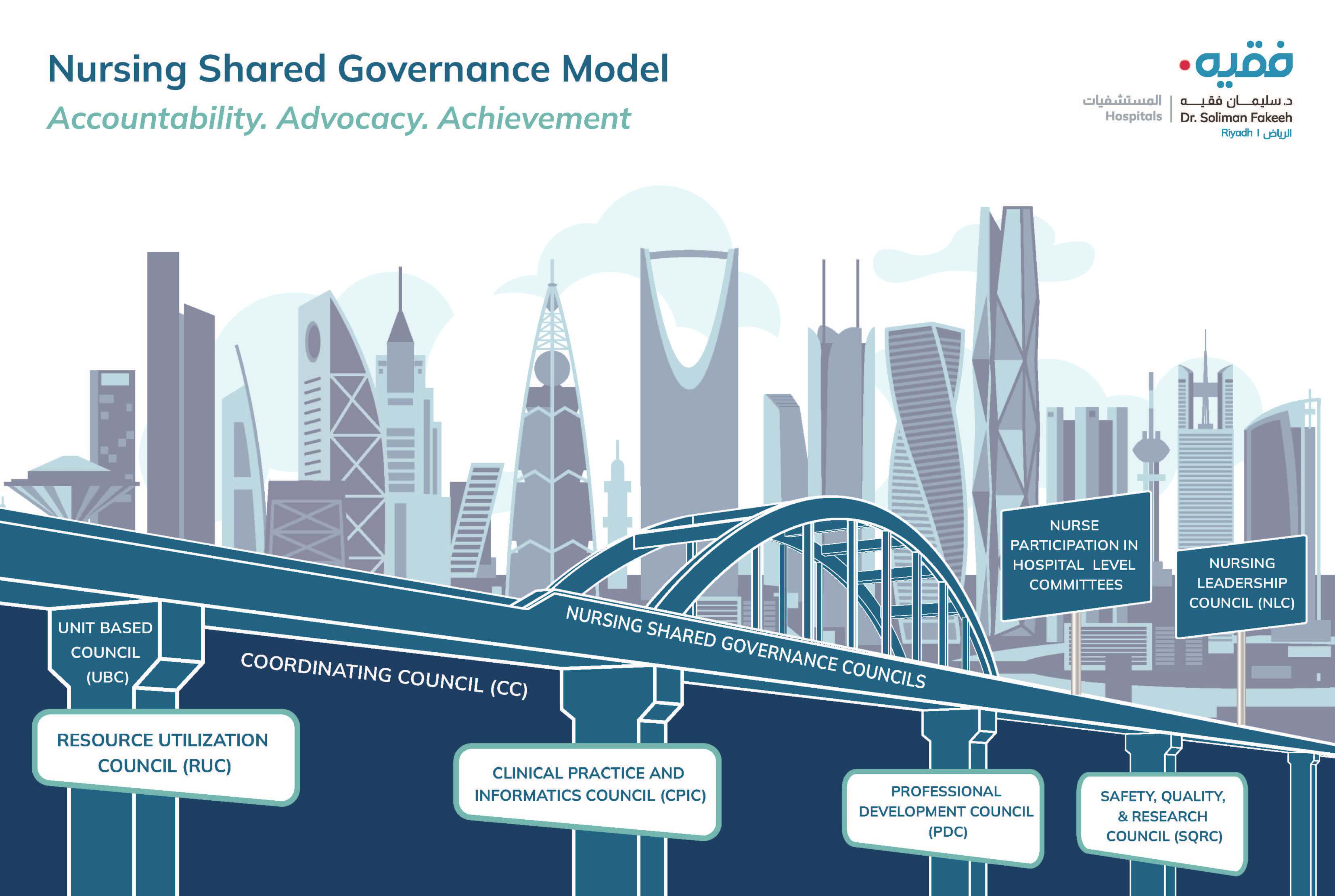
Schematic Concept:
“Transformation in the City, Transformation in the Hospital”
The bridge represents Nursing Shared Governance
The pillars represent the councils
The destination represents future nursing excellence at DSFH R
The Coordinating Council ensures alignment, flow, and integration
Shared Governance Accreditation
Dr. Soliman Fakeeh Hospital Riyadh received Shared Governance Accreditation from the Forum for Shared Governance from June 2026 to June 2030. As per Dr. Robert Hess, Founder and CEO of Forum for Shared Governance, Dr. Soliman Fakeeh Hospital Riyadh achieved one of the highest scores he has ever seen on the Index of Professional Nursing Governance.